Advice for
communities and
individuals

Practical guidance for getting involved in decisions about land

Communities play an important role in how land is used and managed in Scotland.

Whether you are taking part in local decision-making, caring for local places, or exploring new ways of using or owning land, we provide guidance to help you navigate the process with confidence and clarity.

Our role is to help communities understand how land decisions are made, what responsible landownership looks like, and how to engage constructively whether that means joining discussions, asking for better transparency, or raising a concern.

What we can help with


Communities get involved in land in different ways, and our support reflects that.
We can help you:

  • Understand how a land decision is being made and who is responsible
  • Take part constructively in discussions or planning with public and private landowners
  • Explore stewardship or ownership options when appropriate for your community

The principles behind our advice


Our advice is based on Scotland’s Land Rights and Responsibilities Statement (LRRS), which sets out what good practice looks like for everyone involved in land.

We have developed a series of protocols to help communities and individuals understand what responsible land ownership looks like.

  • Community engagement - Communities should have a meaningful opportunity to be involved in decisions about how land is used or managed.
  • Good stewardship - Land should be looked after in a way that supports local wellbeing, the environment and long-term public value.
  • Transparency - It should be clear who owns land, who is responsible for it, and how decisions are made.
  • Opportunities for ownership, lease and use of land and buildings - Communities should be able to explore ways of using, leasing or owning land where this delivers local benefit.
  • Common Good - Land held for community benefit should reflect people’s needs today, not just historic arrangements.

How we can support you


Communities come to us for support at different stages, sometimes to understand what is happening, sometimes to start a conversation, and sometimes to resolve a difficulty. These are some of the most common questions we help with:

  • Finding out who owns or manages land can sometimes be straightforward, but in other cases the information is harder to trace. Registers of Scotland is a starting point, but it doesn't always give the full picture, especially where land is held through companies or trusts.

    We can help you understand the different routes to finding ownership information and what good transparency looks like in practice.

    Our webinar on this topic explains how communities can find ownership information where it isn't readily available.

  • We invest in safety, development and community engagement through apprenticeships and local partnerships.

  • As part of H&P, the largest and longest operating drilling and technology company in the world, we champion rigorous standards in ethics, compliance, and transparency.

    ESG principles are embedded into our strategy and operations, not an added afterthought.

  • As part of H&P, the largest and longest operating drilling and technology company in the world, we champion rigorous standards in ethics, compliance, and transparency.

    ESG principles are embedded into our strategy and operations, not an added afterthought.

Our advice and guidance


We publish a range of guidance to help landowners and managers put these principles into practice. Key tools include:

  • Protocols – straightforward guidance showing what responsible landownership and engagement look like in practice.
  • Toolkits and route maps – step-by-step resources to support communities getting involved in local land issues.
  • Events and training – opportunities to learn and share good practice.
  • Case studies and stories – real examples of how communities are making change happen.

Featured guidance


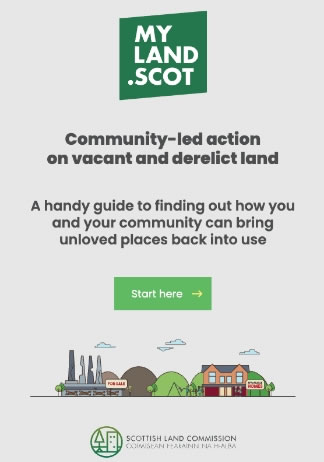
A practical guide to help communities understand how vacant or derelict sites are identified, who is responsible for them, and the steps you can take to bring land back into productive use.

Community-led action on vacant and derelict land

A practical framework to help deliver fair, lasting benefits through natural capital projects.

Good Practice in action


Across Scotland, landowners and managers are putting the Land Rights and Responsibilities Statement into practice. Our case studies and news posts highlight how good stewardship, community engagement and transparent decision-making work on the ground, and the difference these approaches can make for landowners, communities and the wider public.

Events and learning


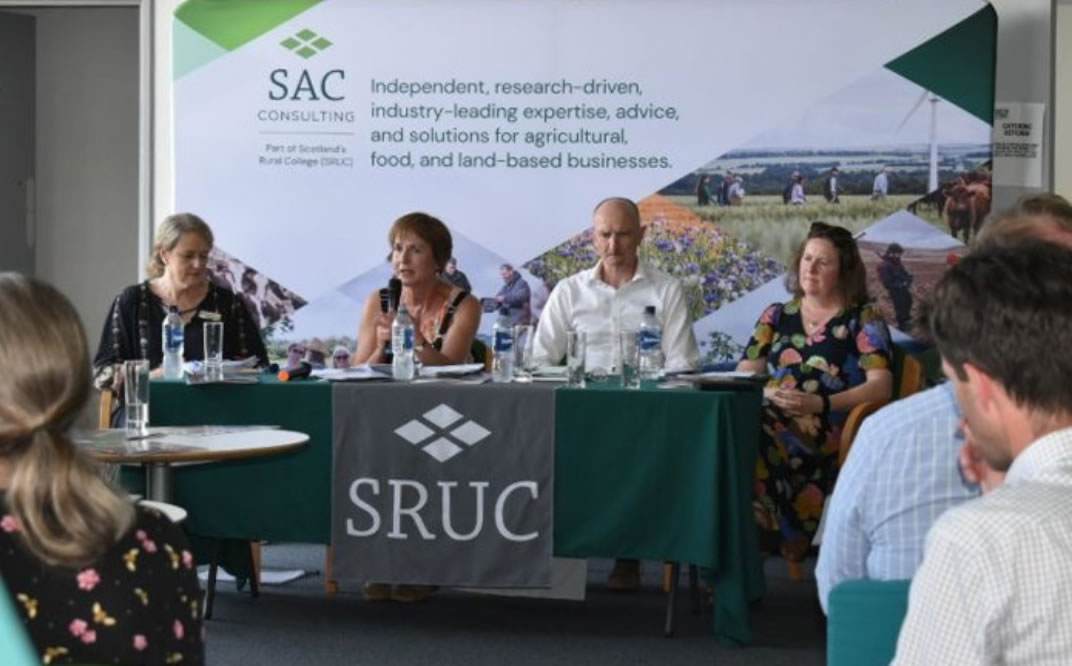
Join our webinars and training sessions to hear from our advisers and others working across Scotland.

These sessions offer practical examples of how landowners and communities are working together, and how good practice can deliver better outcomes for everyone.

Stay connected

Get the latest news, research and events from the Scottish Land Commission direct to your inbox