Land and
regeneration

Transforming Scotland’s vacant and derelict land

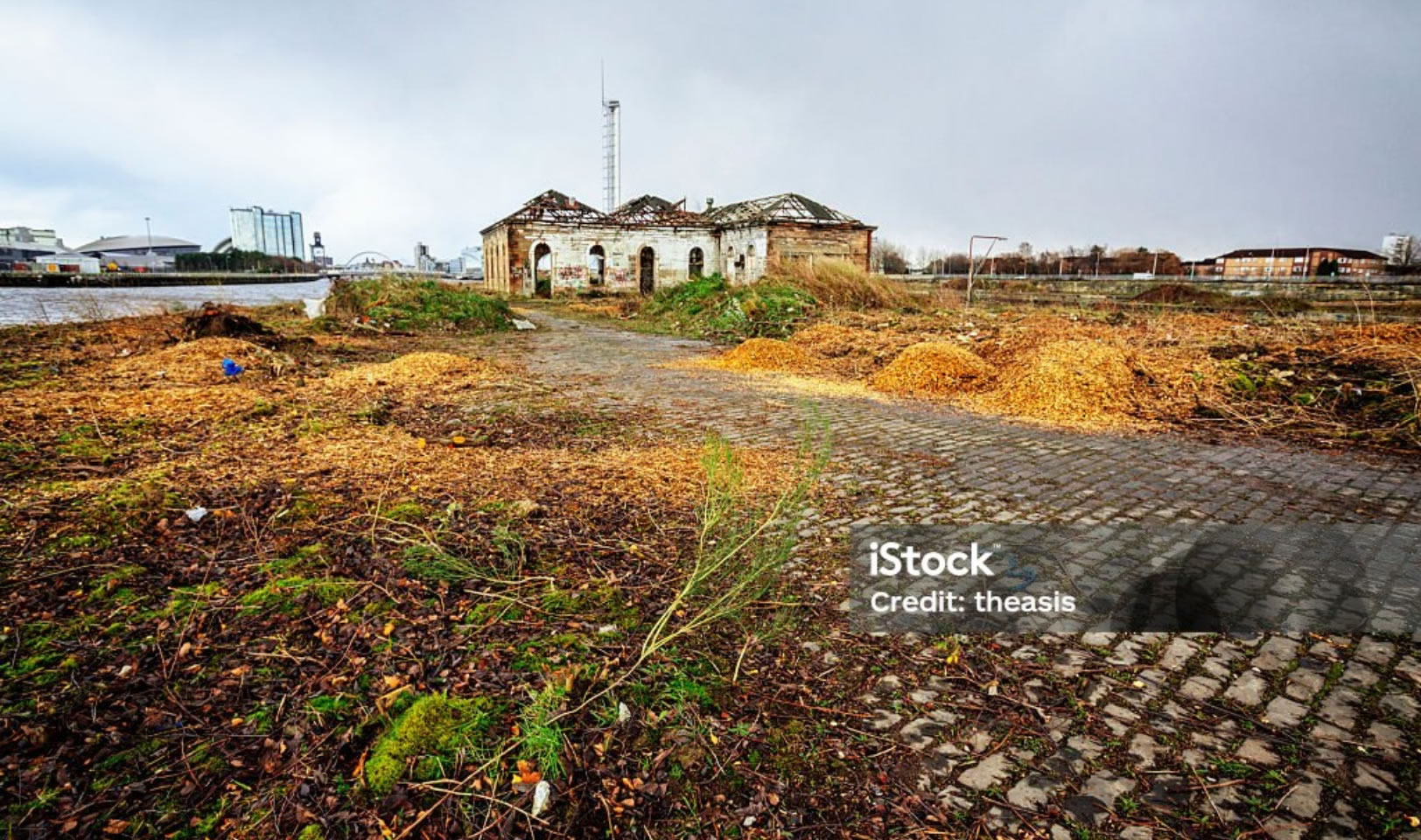
Neglected, empty or derelict land are one of Scotland’s most visible land use challenges, but it’s also one of our greatest opportunities.

Bringing this land back into productive use can revive communities, support economic growth, and help meet Scotland’s climate and nature goals.

The Scottish Land Commission works to understand why land becomes and remains derelict, how it can be reused, and what changes in policy, investment, and practice are needed to unlock its potential.

Why this matters


Reusing derelict land is key to delivering better places, stronger communities and a more sustainable Scotland.

Scotland’s derelict land is a national opportunity

Around 8,858 hectares of land are registered as vacant or derelict across Scotland – more than the entire city of Dundee. These are sites over 0.1ha, many more smaller sites are in a similar state. Tackling these sites can help deliver homes, green space, community facilities and jobs, turning long-term liabilities into local assets.

Persistent sites need systemic change

A small number of long-term derelict sites identified in the Derelict Urban Sites (DUSTEs) map remain stuck because of ownership, funding and planning barriers. Addressing these sites requires co-ordinated national and local action.

Communities can lead regeneration

Local people and community groups are increasingly playing a role in reusing land. Our Vacant and Vacant and Derelict Land Route Map helps communities take practical steps to bring sites back into use.

Our work on land and regeneration


Over the past seven years, the Scottish Land Commission has built the evidence base and recommendations for transforming Scotland’s approach to vacant and derelict land.

Our work began with the Vacant and Derelict Land Taskforce (2018–2020), a partnership with SEPA and others. The Taskforce identified the systemic barriers preventing reuse and set out recommendations for change, including embedding reuse in policy and investment decisions.

Since then, we have continued to develop research, practical guidance and tools to help landowners, developers, local authorities and communities bring sites back into productive use.

Explore our research and reports

Find reports, guidance and tools supporting land reuse across Scotland.

Understanding long-term dereliction


Scotland’s derelict land is a national opportunity

Across Scotland, more than 500 urban sites have been registered as derelict for decades. These DUSTEs, derelict urban sites, are the country’s stuck sites: abandoned places that could be transformed into something better.

In 2020, working with SEPA and the Green Action Trust, we created the DUSTE map to show where these sites are, who owns them and what is happening with them. Landowners, including local authorities, were asked to make a public commitment to take action to bring them back into use.

Many of these sites are in areas facing disadvantage, but they are also full of potential. Reviving them could mean new homes, parks, community gardens, renewable energy projects and local jobs.

Bringing long-term derelict sites back into use can help tackle climate change, improve wellbeing and support local renewal. The DUSTE map also highlights where nature is reclaiming land, redevelopment is underway, or transformation is already complete.

Explore the map below to see where change is needed most and what is already happening across Scotland.
Map

Evidence in practice


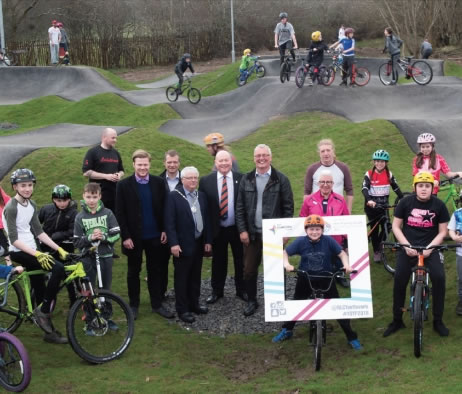
Wishawhill Wood Pump Track

North Lanarkshire

A partnership between the Central Scotland Green Network and the Wishaw Mountain Bike Club transformed a derelict site in an area of multiple deprivation into a world-class community pump track.

Opened in 2018, the track has provided a safe, welcoming space for young people to learn new biking skills and connect with others. Since its creation, police and fire service call-outs have dropped significantly, and residents report far less vandalism and anti-social behaviour.

The project has brought the community together, inspired a new social enterprise to support local activities, and shown how reusing vacant land can change perceptions and improve lives.

Stay connected

Get the latest news, research and events from the Scottish Land Commission direct to your inbox