Land and the
environment

A fair approach to climate-driven land use change

Scotland will need significant land use change to meet its climate and biodiversity goals.

But change on this scale can only succeed if people and communities are part of the journey with a say in how decisions are made, and a fair share in the benefits.

The Commission’s work in this area is focused on fairness, accountability and good governance, helping to ensure that environmental land use change supports a just transition for people as well as nature.
Why this matters


Land use change will play a major role in reaching Scotland’s climate and nature targets, but how that change is carried out matters just as much as what is delivered.

Climate targets mean major land use change

Meeting Scotland’s climate and nature goals will require significant changes in how land is used and managed across the country.

Environmental change needs public trust to succeed

Environmental benefits alone are not enough, people need to see fairness in how change happens.

A just transition needs participation

A fair transition means people and communities are involved in decisions and see clear local benefits from investment and change.

Decision-making in land use change


Scotland’s net zero and nature recovery commitments mean there will be major changes in how land is managed over the coming decades. The Scottish Government has also committed to delivering this through a just transition, which means that people and communities should be involved in shaping change, and should share in the benefits that come from it.

Achieving these goals will depend not only on what changes on the land, but how decisions are made. People are more likely to support change when it is transparent, locally rooted and designed to reflect the needs and priorities of the place, not only national policy.

Regional Land Use Partnerships are one of the emerging ways Scotland is trying to make this possible. They aim to bring different interests around the table and connect national climate targets with local priorities. The approach is still developing, and building meaningful participation will take time, but it represents a shift toward land use change being planned with communities rather than for them.

Natural capital and responsible investment


The transition to a net zero economy is driving major changes in how land is used in Scotland. New markets linked to carbon, nature restoration, and renewable energy are becoming more influential, and this is attracting new buyers to the land market, as well as shaping decisions by existing landowners and managers.

These changes bring both opportunities and risks. Natural capital investment can support climate goals and nature recovery, but it also raises important questions about who benefits, how decisions are made, and what this means for communities and places.

We have published guidance to support responsible approaches to natural capital investment and to help landowners and investors consider community benefit from the outset.

Useful resources for Natural capital and responsible investment


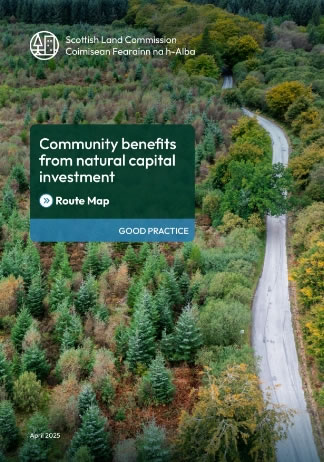
Community benefits from natural capital investment: Route Map

A guide to discussing and embedding proportionate community benefits in natural capital projects from the outset.

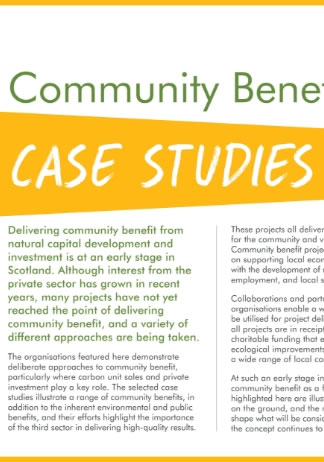
Community Benefit Case Studies

A collection of six case studies showing how community benefit is being delivered from natural-capital and land-based investments in Scotland

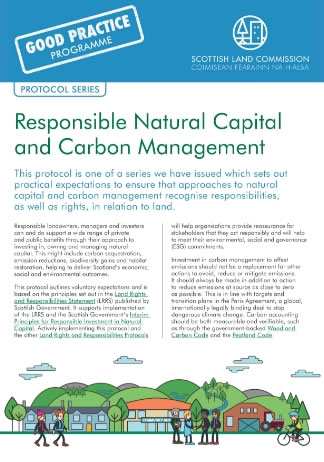
Responsible Natural Capital and Carbon Management

A protocol outlining practical expectations for responsible natural capital and carbon management in Scotland.

FAQs on Responsible Natural Capital and Carbon Management Protocol

Answers to FAQs about the protocol for responsible natural capital and carbon management

Land use change and farming


Environmental land use change is also reshaping decisions on farmland, particularly where there is interest in planting trees or restoring habitats. For owner-occupier and tenant farmers, these changes involve real opportunities and trade-offs between conventional practices, new types of diversification, and long-term land use planning.

The Tenant Farming Commissioner has produced guidance to support constructive conversations between landlords and tenants about tree planting on farmland, helping ensure that environmental objectives are balanced with existing business needs, livelihoods, and long-term tenancies.

Evidence in practice


Seven Lochs Wetland Park

The Seven Lochs Wetland Park developed through a partnership between local authorities, conservation bodies, and communities and shows how large-scale restoration can succeed when local people are involved in shaping and benefiting from the change.

It demonstrates how environmental investment can strengthen community connection to land, improve public access, and build long-term social value alongside nature recovery.

Our work on land and the environment


We support a fair transition by helping organisations make decisions about land in an open and responsible way. We share examples of what good practice looks like, and we gather evidence on how environmental land use change is affecting communities.

Visit the land and environment library

Browse our full library of research, guidance and reports.

Stay connected

Get the latest news, research and events from the Scottish Land Commission direct to your inbox