Land and the
economy

Land’s role in a fair and thriving economy

Land is one of Scotland’s most valuable economic assets with an estimated value of around £5 trillion - just over half of the total net worth of the UK.

The way it is owned, taxed and used affects the economy at every level influencing where homes and businesses are built, where investment happens, and how prosperity is shared.

The Scottish Land Commission looks at the role of land in the economy and how we can shape land markets, so that they can work better together to create a fairer and more productive economy that delivers lasting public benefit.

Why this matters


Land plays a central role in Scotland’s economy, but the way it is used and valued is complex and doesn’t always deliver the best outcomes for people or places.

Understanding this complexity and reforming how we manage, invest in and tax land, can help build a fairer, stronger economy for everyone.

Land is a foundation of Scotland’s economy

Every piece of land is unique, and it is finite, so its value is determined by different factors including location or potential for development. When wealth is tied up in land rather than used productively, it can limit growth and widen inequality.

Shaping land markets can improve productivity and wellbeing

Funding, finance and planning systems play a powerful role in where and how land is used, where we invest and who benefits. Public sector leadership and diverse ownership models can help bring underused land back into use, support new development, and ensure economic growth benefits more people and places.

Sustainable growth depends on recognising land’s wider value

Land is not just a space for economic activity, it is natural assets that underpin the whole economy, from food and timber to carbon storage. Viewing land as part of our long-term economic infrastructure helps guide policy and practice that supports both prosperity, wellbeing and resilience.


Inequality, cost of living, and land


Scotland faces rising inequality and cost pressures. Land plays a role in both, especially when ownership is very concentrated, or when land is locked up and underused.

More than half of the UK’s wealth is now held in land. This concentration affects who has access to homes, work and investment. When land is treated mainly as a financial asset rather than a productive one, it can lock up capital that might otherwise support innovation, local enterprise or new housing.

These patterns feed into the cost of living as high land and property costs push up house prices and rents, making it harder for people to live near work or services. They can also drive urban sprawl, adding transport costs and increasing pressure on public infrastructure.

Making better use of land through fairer taxation, more transparent ownership and support for community-led development can help spread opportunity, boost productivity and ease cost pressures. By focusing on how land contributes to inequality, Scotland can take practical steps towards a fairer and more resilient economy.

Community Wealth Building


The way land is owned, managed and invested in can either draw wealth out of communities or help it stay and circulate locally.

Community wealth building (CWB) is about making sure that the value generated by land and other local assets benefits local people. It shifts economic power closer to communities by helping them shape, manage or directly own the places where wealth is created.

Watch Community Wealth Building Guidance (2:25)

There are five pillars of community wealth building – spending, inclusive ownership, fair work, finance, and land and property. Our work focuses on the land and property pillar, helping public bodies and other anchor institutions to use the land they hold in ways that support local wellbeing and economic resilience.

Underpinned by the Land Rights and Responsibilities Statement , this means owning and managing land in a way that grows social, economic and environmental value for communities – not just private financial return.

Our guidance sets out practical steps that public bodies can take to:

  • Support local businesses and community enterprises,
  • Open up access to land for new uses, and ensure public assets deliver clear public benefit.

Useful resources for Community Wealth Building


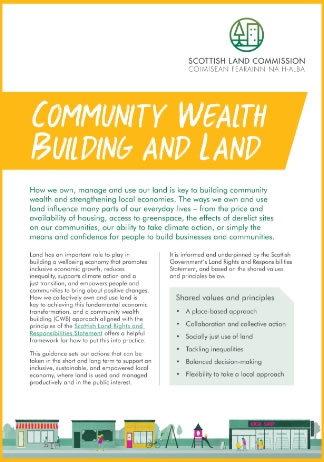
Community Wealth Building and Land

Guidance on how public bodies can use land to support inclusive, sustainable local economies through community-wealth building.

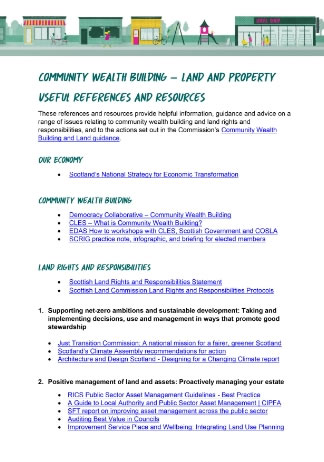
Community Wealth Building - References and Resources List

A reference list of key resources on community wealth building and land.

Rural land markets and investment


The rural land market plays a major role in how land is used and who is able to access it. Our Rural Land Market Reporting tracks activity in the market including who is buying land, the motivations behind purchases, and how this affects land use over time.

The reporting helps build a clearer picture of investment trends in estates, forestry and farmland, and how these trends influence local economies and future policy decisions.

Natural capital and community benefits


The transition to a net zero economy is driving major changes in how land is used in Scotland. Markets linked to carbon, nature restoration and renewables are growing quickly, and this is attracting new buyers as well as influencing decisions by existing landowners and managers.

These changes bring both opportunities and risks. Natural capital investment can support climate goals and nature recovery, but it also raises important questions about who benefits, how decisions are made, and what this means for communities and places.

We have published guidance to support responsible approaches to natural capital investment and to help landowners and investors consider community benefit from the outset.

Useful resources for Natural capital and community benefits


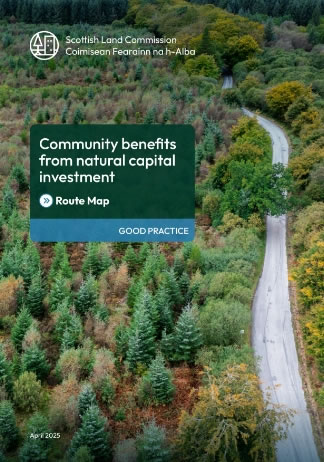
Community benefits from natural capital investment: Route Map

A guide to discussing and embedding proportionate community benefits in natural capital projects from the outset.

Community Benefit Case Studies

A collection of six case studies showing how community benefit is being delivered from natural-capital and land-based investments in Scotland

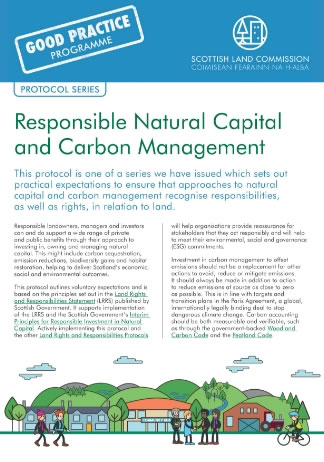
Responsible Natural Capital and Carbon Management

A protocol outlining practical expectations for responsible natural capital and carbon management in Scotland.

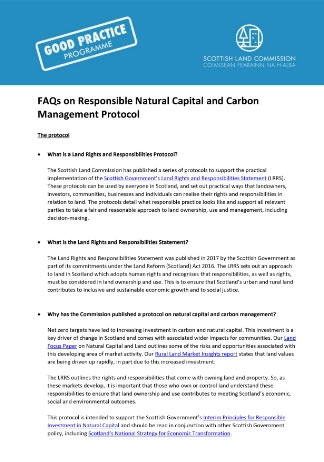
FAQs on Responsible Natural Capital and Carbon Management Protocol

Answers to FAQs about the protocol for responsible natural capital and carbon management

Our work on land and the economy


The Scottish Land Commission is examining how land ownership, tax and investment influence national outcomes and how policy reform can unlock opportunity and fairness.

Visit the land and economy library

Browse our full library of research, guidance and reports.

Stay connected

Get the latest news, research and events from the Scottish Land Commission direct to your inbox