Advice for
landowners and
managers

Practical guidance for responsible land ownership

Owning and managing land in Scotland brings opportunities as well as responsibilities.

Decisions about land affect the people who live and work around it, as well as the economy and environment.

The Scottish Land Commission provides clear, practical advice to help landowners and managers make decisions in the public interest and in line with good practice.

Key principles for landownership


Our advice is built on the Land Rights and Responsibilities Statement (LRRS), which sets out what responsible landownership means in Scotland.

We have developed a series of protocols to help landowners and managers understand how these principles look in practice, and to support consistent good practice across the country.

Our advice and guidance


We publish a range of guidance to help landowners and managers put these principles into practice. Key tools include:

  • Protocols – practical steps for applying the Land Rights and Responsibilities Statement.
  • Guidance and toolkits – detailed advice on specific issues.
  • Events and training – opportunities to learn and share good practice.
  • Case studies and stories – examples of what works in practice.

Featured guidance


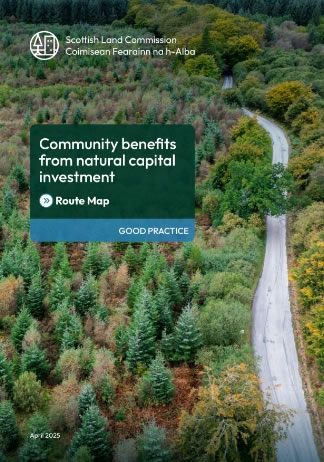
Community benefits are an expected outcome of natural capital investment projects. This Route Map provides a practical guide for landowners, project developers and communities on how to discuss and embed proportionate benefits from the outset.

Route map: Community benefits from natural capital investment

A practical framework to help deliver fair, lasting benefits through natural capital projects.

Good Practice in action


Across Scotland, landowners and managers are putting the Land Rights and Responsibilities Statement into practice. Our case studies and news posts highlight how good stewardship, community engagement and transparent decision-making work on the ground, and the difference these approaches can make for landowners, communities and the wider public.

How can you demonstrate good practice?


One way is by joining the Commitment to Responsible Landownership (CoRLa), a new scheme that gives landowners public recognition for putting the Land Rights and Responsibilities Statement into practice.

Through CoRLa, landowners carry out a simple self-evaluation, develop an action plan for improvement, and make a public commitment that communities and stakeholders can see.

Stay connected

Get the latest news, research and events from the Scottish Land Commission direct to your inbox